



Inflammation is often understood as something visible: redness, swelling, pustules, heat, or discomfort. In the skin, however, inflammation frequently operates below the threshold of obvious symptoms.
Many of the most common skin conditions – acne, rosacea, dermatitis, premature aging, post-inflammatory pigmentation, and heightened sensitivity – share a common biological thread: persistent inflammatory signaling. This signaling is often invisible, driven by biochemical stress pathways rather than overt clinical signs. It may fluctuate, intensify, or temporarily quiet down, but it rarely disappears entirely.
In aesthetic medicine, inflammation is often treated as a side effect to be minimized or suppressed – and in some contexts even deliberately induced, without a full understanding of its biological implications. In reality, inflammation is not inherently negative. It is a fundamental biological response that enables defense, repair, and adaptation. The challenge arises when inflammatory activity becomes chronic, dysregulated, or repeatedly reactivated without sufficient resolution.
Understanding inflammation as a continuum rather than an on–off phenomenon is therefore essential. Skin does not need to appear inflamed to behave as if it is under inflammatory stress. Subtle signs of dysregulation often dictate how skin responds to treatments, how it recovers, and how resilient it remains over time.
Recognizing inflammation as a common denominator – and distinguishing between advantageous, resolving inflammation and non-desired, persistent inflammatory states – provides a more coherent framework for understanding why skin responds as it does, and why some treatment strategies succeed while others plateau or fail.
Many people are probably tired of hearing me talk about stress in the skin and the impact it has. But once you start understanding skin stress – and actively consider it in patient evaluation and treatment planning – the likelihood of achieving better, more sustainable outcomes increases significantly.
Inflammation is not a flaw in the system. It is a survival mechanism.
From an evolutionary perspective, inflammatory signaling evolved to protect the organism from acute threats: injury, infection, and environmental danger – it was about survival – to be able to run from the tiger, or not bleed out from wounds were more important than the overall appearance of our skin. In this context, inflammation is decisive, efficient, and self-limiting. It mobilizes immune cells, increases vascular permeability, and prioritizes repair over refinement. Once the threat is resolved, the system ideally returns to baseline.
This type of inflammation is advantageous. It enables healing.
Problems arise when inflammatory signaling no longer reflects an acute threat, but instead becomes persistent or repeatedly triggered – intentionally or unintentionally. In such cases, the skin is not responding to danger – it is behaving as if danger is constant.
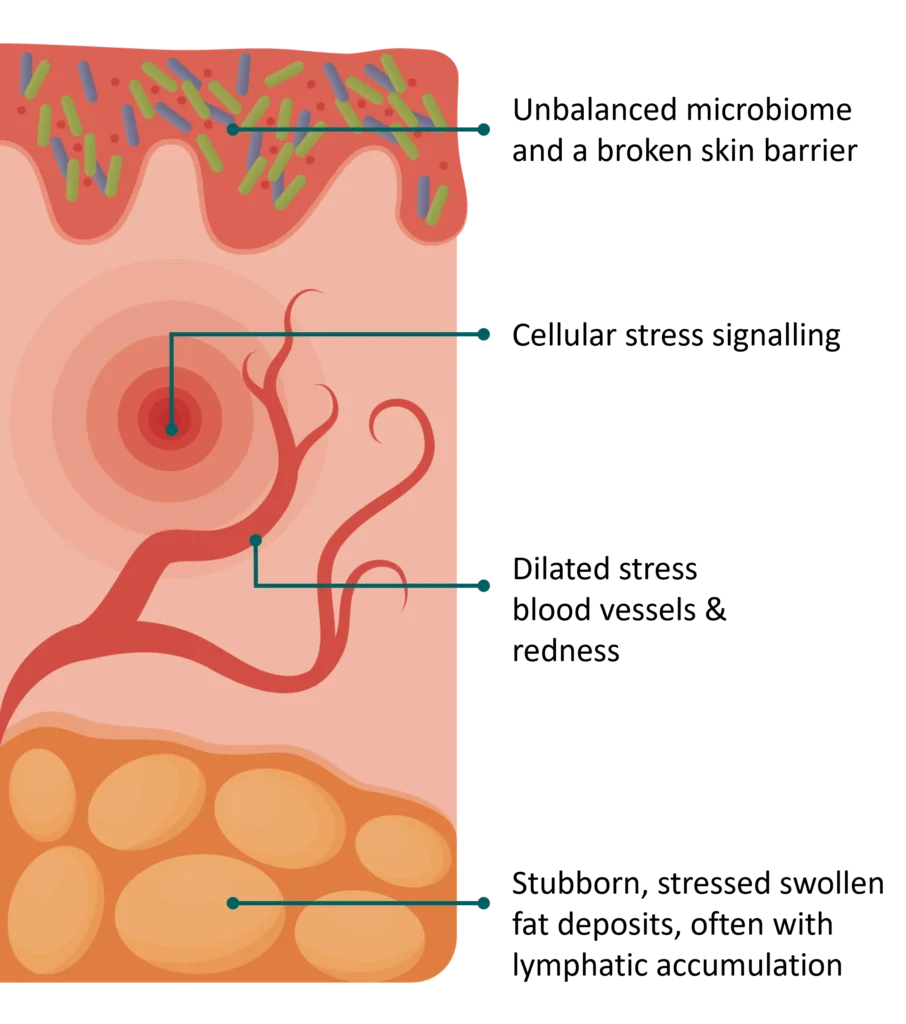
Biologically, this represents a shift from regeneration to survival mode. Energy and resources are diverted away from long-term maintenance, tissue optimization, and adaptive resilience, and toward vigilance and defense. The skin may still function, but it does so under constraint.
Importantly, this state does not require visible inflammation. Redness and swelling may be absent, while cellular signaling remains biased toward alertness rather than recovery. Over time, this low-grade inflammatory state alters how the skin responds to stress, how it heals, and how much additional challenge it can tolerate.
In aesthetic and dermatological contexts, repeated procedures, wrongly selected cosmetic products, chronic or mental stress, sleep deprivation, environmental exposure, and insufficient recovery can unintentionally reinforce this alarm state. Each intervention may be well tolerated in isolation, yet cumulatively signal to the skin that conditions are unsafe for regeneration.
Understanding this distinction – between inflammation that resolves and inflammation that persists – is critical. One supports repair and renewal. The other gradually limits capacity.
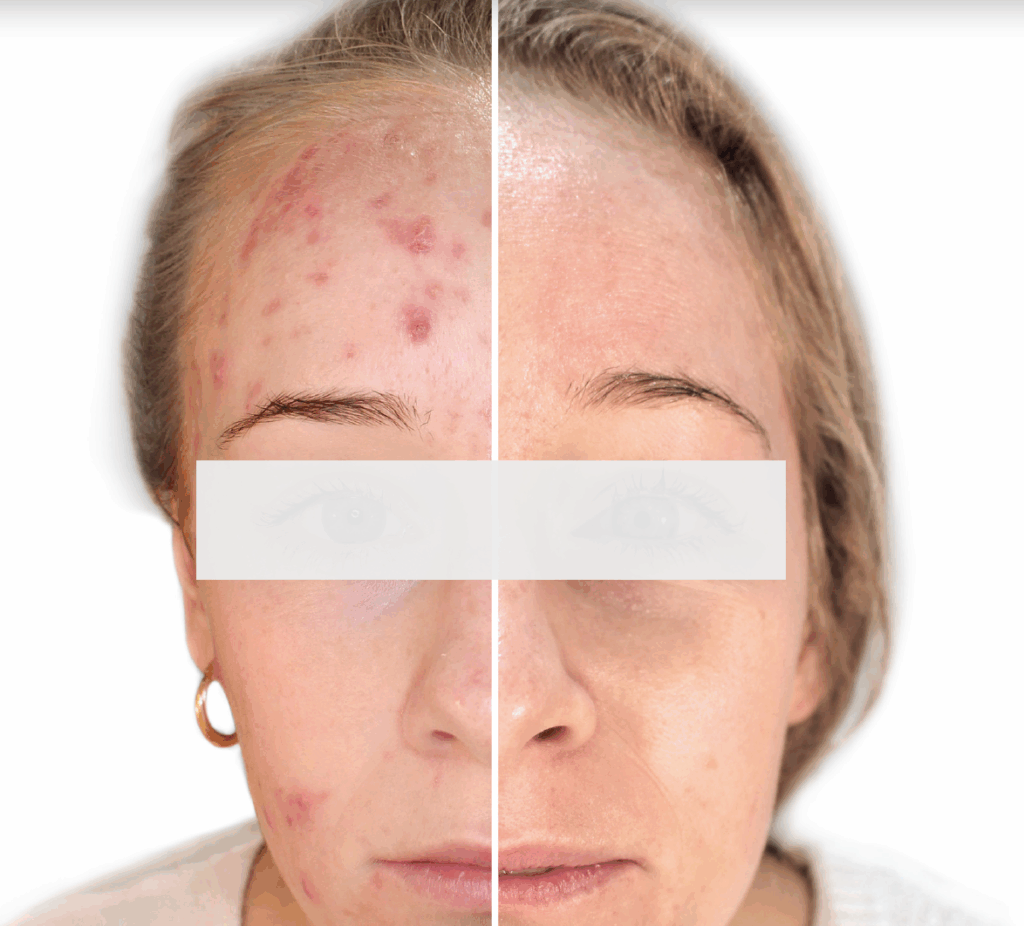
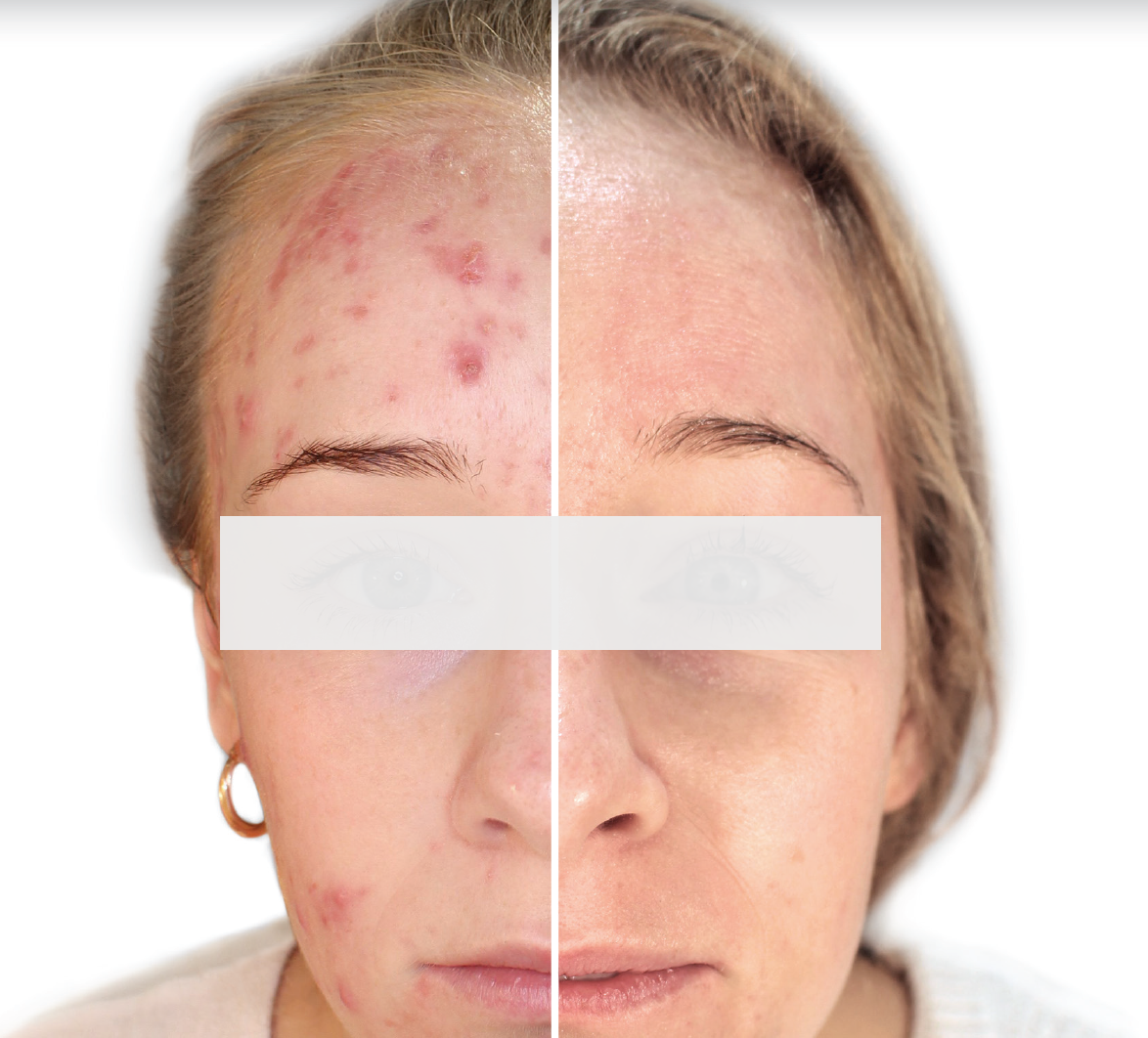
Not all inflammation announces itself, as redness, rosacea, acne or lesions.
In many cases, the skin appears visually calm – even healthy – while underlying inflammatory pathways remain active. This state, often referred to as subclinical inflammation, is characterized by biochemical signaling rather than overt clinical signs. Cytokine activity, immune cell priming, and barrier-related stress responses may persist without redness, swelling, or discomfort.
Subclinical inflammation is particularly relevant in aesthetic practice because it directly influences how skin reacts to intervention. Skin in this state may tolerate a single treatment well, yet respond unpredictably when treatments are repeated, combined, or intensified. Recovery may appear complete on the surface, while deeper regulatory processes remain unsettled. We see this often in acne cases – appearing to be mild at first, but once we start treatment the true nature of the deeplying inflammation appears – suddenly a very different challenge – but one we take on with pride.
This helps explain why some patients experience inconsistent outcomes despite technically correct protocols. The issue is not poor execution, but a mismatch between treatment demand and the skin’s underlying inflammatory load. When skin operates in a heightened alert state, even mild additional stimuli can trigger disproportionate responses – at a biochemical level we see that high level of stress cause the fibroblasts to not be able to really produce collagen – certainly not a desired state for many aesthetic procedures.
Importantly, subclinical inflammation is not limited to diseased skin. It is frequently observed in patients with cumulative exposure to chronic stress, chronic inflammatory illnesses, metabolic disorders, mental stress, environmental stress, repeated procedures, disrupted barrier function, insufficient recovery time – and in some cases even the lack of sleep or a wrongful applied diet. Because this type of subclinical inflammation lacks obvious markers, it is easily overlooked in standard assessments.
Recognizing subclinical inflammation requires shifting attention from visible signs to patterns and subtle signs: hightened stress combined with diets, high sensitivity to cosmetic products or food, imbalanced skin barrier layers lacking either water-based hydration or lipds, subtle redness of the skin, delayed recovery, fluctuating sensitivity, increased reactivity to previously tolerated treatments, or narrowing margins for error. These patterns signal that the skin is functioning defensively rather than adaptively.
Addressing inflammation at this level is less about suppression and more about restoring balance – allowing inflammatory responses to resolve fully, rather than persist quietly in the background.
Inflammation and Treatment Tolerance
Treatment tolerance is not a fixed patient characteristic. It is a dynamic reflection of the skin’s current inflammatory state.
When inflammatory signaling is balanced and resolving, the skin can absorb and benefit from mechanical, chemical, or energy-based interventions and return to equilibrium. In this context, treatments stimulate adaptive responses that support repair and regeneration. Tolerance is high, recovery is predictable, and outcomes remain consistent over time.
When inflammation is persistent or repeatedly reactivated, the same interventions are interpreted differently by the skin. Signals intended to stimulate improvement are processed as additional stress. As a result, recovery slows, sensitivity increases, and the range of tolerable interventions narrows – even if the treatments themselves have not changed.
This shift often occurs gradually. Early signs may include prolonged erythema, delayed barrier recovery, or increasing dependence on post-treatment calming strategies. Over time, clinicians may compensate by reducing intensity, extending intervals, or limiting combinations, not because protocols are flawed, but because the skin’s tolerance has eroded. But even worse, we often see practices where it is believed that even more harsh products or treatments are recommended – indicating a lack of respect for the biology being treated.
From a biological perspective, this erosion reflects prioritization. In a state of inflammatory alert, the skin allocates resources toward defense rather than optimization. The capacity to respond constructively to additional stimuli diminishes.
Understanding treatment tolerance as an inflammatory phenomenon – rather than a patient limitation – allows for more strategic planning. By addressing inflammatory load, active destressing and recovery capacity, tolerance can often be preserved or restored, expanding therapeutic options rather than constraining them.
Why Inflammation Shapes Long-Term Outcomes
Inflammation does not only influence how skin responds to a single treatment. It shapes the trajectory of skin behavior over time.
When inflammatory responses are allowed to resolve fully, the skin retains its ability to adapt. Treatments remain effective across repeated cycles, recovery stays efficient, and clinical decision-making remains flexible. In this state, outcomes are not only visible but durable.
When inflammatory signaling becomes persistent, even at a low level, the opposite pattern emerges. Each intervention adds to an unresolved load, gradually shifting the skin toward defensiveness. Over time, this reduces regenerative capacity, limits treatment options, and increases the risk of inconsistent or diminishing results.
This is why two patients with similar presentations and identical protocols may diverge significantly in their long-term outcomes. The difference is rarely technique or technology. It is the inflammatory context in which treatments are delivered. We all know the situation where your best friend get great results from a product or treatment – yet, you see nothing, or perhaps even worse skin. And off course the same phenomena is even more present at social media – just because something (perhaps) worked for an influencer – it does not mean it is right for you – and your skin.
From a strategic perspective, inflammation functions as a multiplier – either amplifying the benefit of well-timed interventions or compounding stress when recovery is insufficient. Long-term success therefore depends less on maximizing immediate effect and more on reducing the baseline stress and maintaining or boosting the conditions under which the skin can continue to respond constructively.
In aesthetic medicine, sustainable outcomes are built not by avoiding inflammation altogether, but by ensuring that inflammatory responses remain purposeful, contained, and fully resolved before the next challenge is introduced. In this way with the correct treatments, we can indeed push the skin in the right direction – a direction of regeneration.
That distinction – between inflammation that enables progress and inflammation that limits it – is what ultimately defines whether treatment strategies scale forward or plateau.
References
This article is inspired by a body of peer-reviewed research and clinical literature, including but not limited to – if you have any questions, reach out to us:
- Medzhitov R.
Origin and physiological roles of inflammation.
Nature. 2008;454(7203):428–435.
https://doi.org/10.1038/nature07201
https://www.nature.com/articles/nature07201
- Nathan C, Ding A.
Nonresolving inflammation.
Cell. 2010;140(6):871–882.
https://doi.org/10.1016/j.cell.2010.02.029
https://www.cell.com/cell/fulltext/S0092-8674(10)00182-0?
- Kupper TS, Fuhlbrigge RC.
Immune surveillance in the skin.
Nature Reviews Immunology. 2004;4:211–222.
https://doi.org/10.1038/nri1310
https://www.nature.com/articles/nri1310
- Pilkington SM, Bulfone-Paus S, Griffiths CEM, Watson REB.
Inflammaging and the skin.
Journal of Investigative Dermatology. 2021;141(4):1087–1095.
https://doi.org/10.1016/j.jid.2020.11.006
https://www.jidonline.org/article/S0022-202X(20)32294-6/fulltext
- Elias PM.
Skin barrier function.
Current Allergy and Asthma Reports. 2008;8(4):299–305.
https://doi.org/10.1007/s11882-008-0048-0
https://link.springer.com/article/10.1007/s11882-008-0048-0
- Proksch E, Brandner JM, Jensen JM.
The skin: an indispensable barrier.
Experimental Dermatology. 2008;17(12):1063–1072.
https://doi.org/10.1111/j.1600-0625.2008.00786.x
https://onlinelibrary.wiley.com/doi/10.1111/j.1600-0625.2008.00786.x
- Del Rosso JQ, Levin J, Zeichner J, et al.
The role of skin care as an integral component in the management of acne vulgaris.
Journal of Clinical and Aesthetic Dermatology. 2013;6(12):19–27.
https://pmc.ncbi.nlm.nih.gov/articles/PMC3997205/
 English